Friday, 1 February 2013

How To Create A Scandi-Chic Floor With Osmo's Oils

In Part 2 of our mini-series featuring Osmo products, we'll be showing you how to create the Scandinavian floors that we shared in our last post.


There are so many products available that it can be daunting to know where to begin but by shopping at Relics of Witney, rather than a huge DIY chain, you can rest assured that we've whittled down the range for you; we only stock products that we love, that we have experience with and about which we can offer expert advice.


Take Osmo, for example. The downstairs of Kate's beautiful cottage used to be a mix of carpet and lino but has been utterly transformed by their outstanding range of naturally-based oils.


First, pine boards were laid (which can be supplied through Relics). Then, after experimenting with spare bits of flooring to see how the colour of the pine would change with varying amounts of tinted oils, Kate decided to enhance the natural paleness of the untreated pine with one coat of Osmo Polyx Oil in White Tint.


Osmo's Oils can be rolled on (with purpose-made rollers for the job) but here they were applied with Osmo's natural bristle brushes, which give an extremely smooth finish.


The White Oil Tint was followed by one coat of Osmo Polyx Oil in Clear Satin, which was, again, applied with a brush.


Kate chose the Satin-Matt Oil, rather than Matt, to give the floor a finished feel, plus the slight sheen maximises the light and airy feel that Kate was after.


Before committing to such a big project, we'd recommend experimenting with Osmo's oils on off-cuts to make sure that you end up with exactly the look you're after. At Relics, we have small-sized pots for this purpose, as well as treated wood samples to help you pick out the right combination of Osmo's products for your floor.
Enter your email address:

to subscribe to Relics of Witney

Tuesday, 15 January 2013

A Beautiful Georgian Home Featuring Osmo Floors

Welcome to the first in a two-part series about one of our favourite companies: Osmo, who have created a whole range of fantastic products for the treatment of wood. They are based on natural oils and waxes, rather than the extremely toxic chemicals so often found in wood preservatives. The Osmo range can help you to create beautiful floors, including the highly fashionable Scandi-Chic look, simply and easily.

Georgian cottage | Room designs | PHOTO GALLERY | Housetohome.co.uk

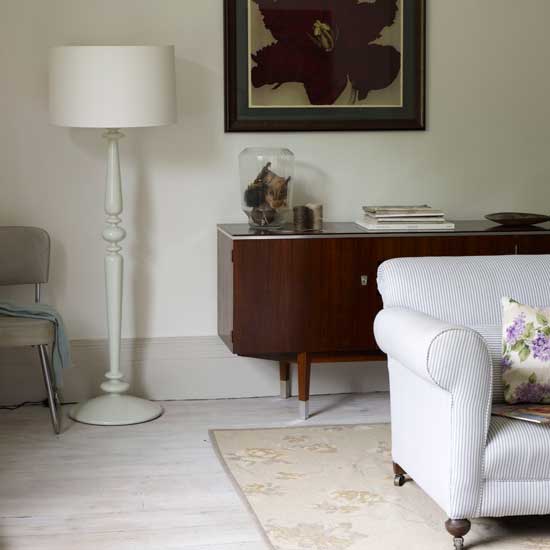
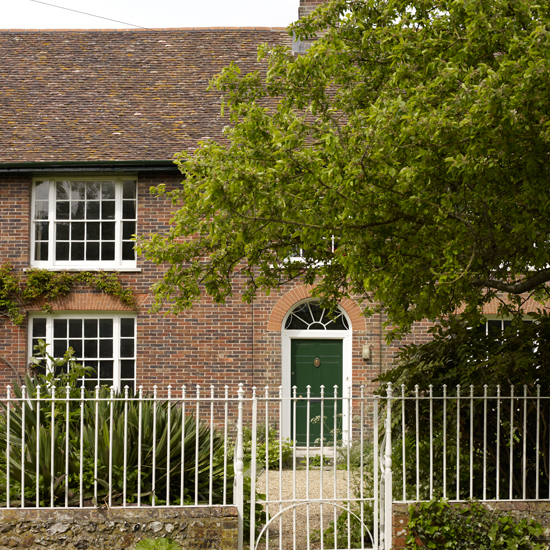
This month, we're focusing on inspiring you with this amazing Georgian house, which has been showcased in a number of books and magazines, as well as for The White Company's Christmas 2012 range. Just look at the beautiful floors throughout the whole space.


The home is featured extensively in one of our most popular books: Farrow and Ball's Living With Colour.

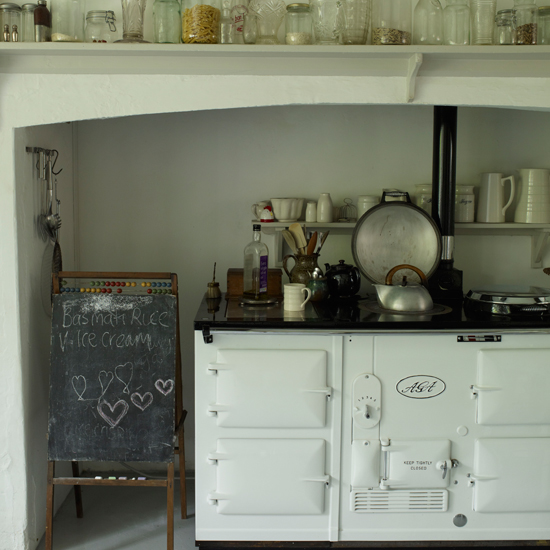
Aga | Cosy Georgian cottage house tour

This cottage is actually rented, though the owners have been able to make cosmetic alterations. We want to show you how, with a bit of imagination, and by selecting the right products, you can make an enormous difference to your home, whether rented or otherwise.

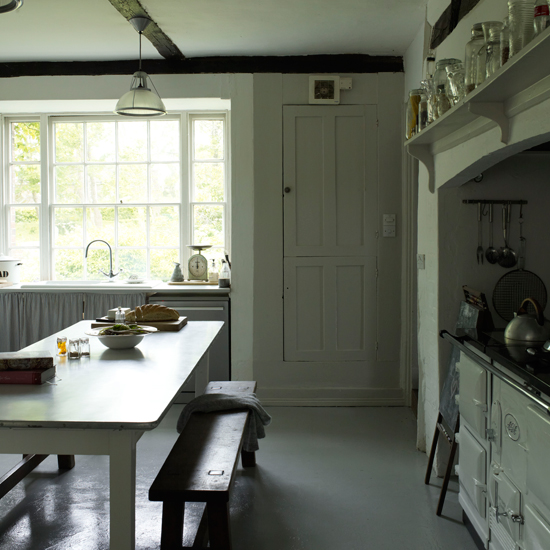
Kitchen | Cosy Georgian cottage house tour

When the current tenant moved in, the walls were yellow and the woodwork was a particularly shocking shade of orange pine. It was once a larger, grander house, hence the beautiful stairway, but has been carved in two and so now has a slightly higgledy-piggledy feel.

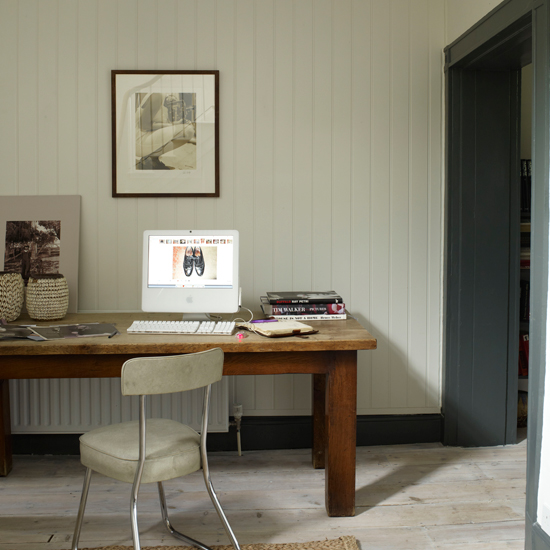
Home office | Cosy Georgian cottage house tour

However, the bones of the house are outstanding and, by choosing a neutral and harmonious palette throughout the house, it has been completely transformed.

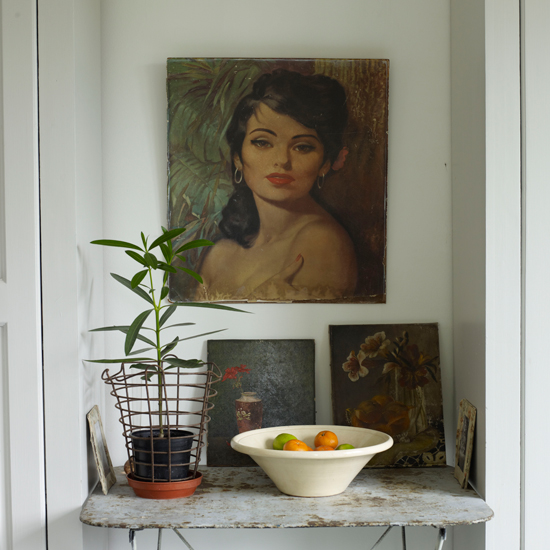
Hallway | Cosy Georgian cottage house tour

Using a select group of shades in your home is a great trick to create a peaceful flow of continuity. It can be tricky getting the exact palette right, which is where we'd be delighted to help. At Relics of Witney, we can discuss the look you dream of and help you create the perfect range of hues to make that dream a reality in your home.

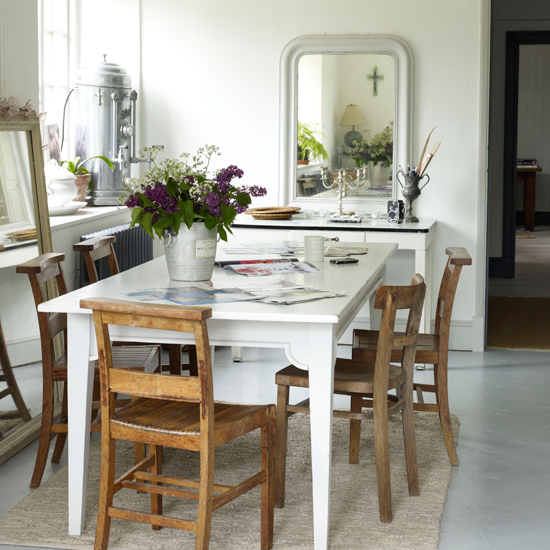
Dning room | Cosy Georgian cottage house tour

In this case, paints used include Farrow and Ball's Strong White for many of the walls, whilst Down Pipe and Cornforth White have been employed to unify the woodwork throughout most of the house.

Bathroom | Cosy Georgian cottage house tour

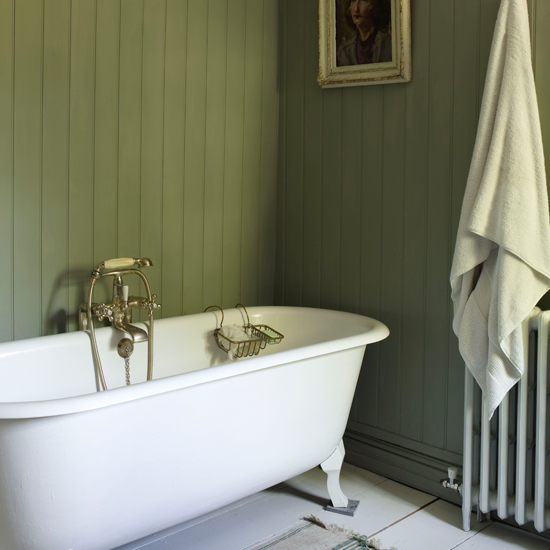
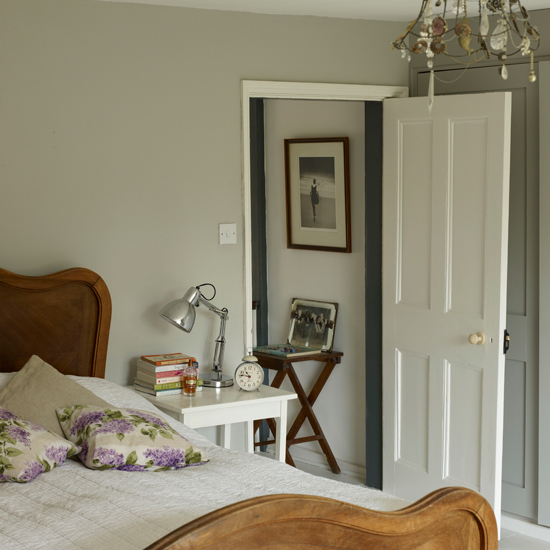
The bathroom has been painted in Farrow and Ball's Pigeon, where tongue and groove boarding apparently hides a multitude of sins in the plasterwork. Hardwick White provides subtle contrast on the run of cupboards in the main bedroom.

Bedroom | Cosy Georgian cottage house tour

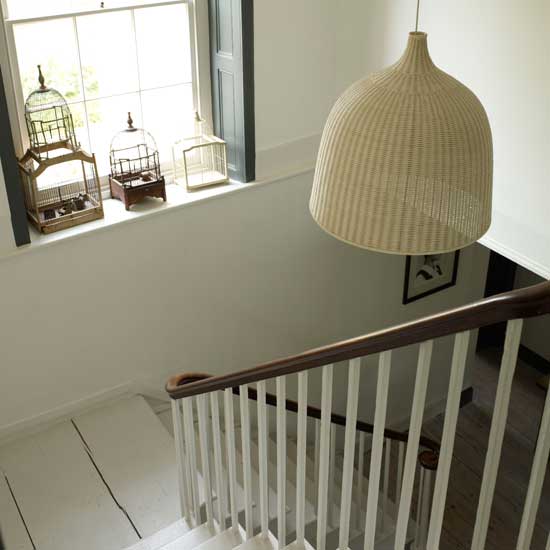
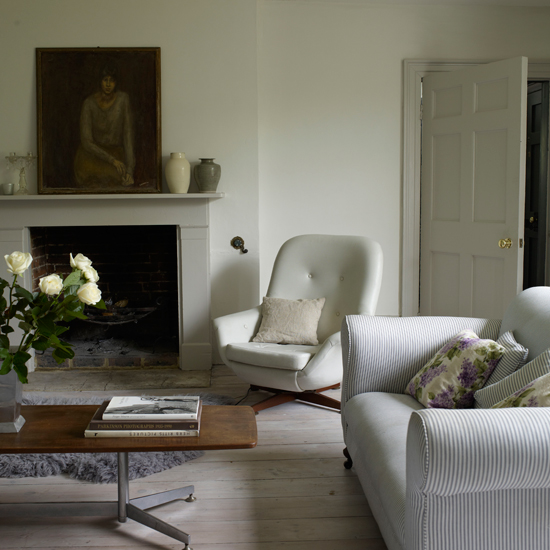
The floors downstairs have been sanded back and treated with Osmo's White Wood Wax, followed by a coat of Osmo's Polyx Oil, whilst the upstairs floors have been given several treatments to provide a more solid colour.

Georgian cottage | Room designs | PHOTO GALLERY | Housetohome.co.uk

The owners are postively evangelical about the outstanding qualities of the Osmo range. It is possible to buy in treated limewashed floorboards but you will have to reach very deep into your pockets! Osmo provide a way to achieve the look on a much smaller budget, without compromising on either the integrity of the finished look or of your environmental impact.

Living room | Cosy Georgian cottage house tour

In our next post, we'll share exactly how you can achieve this gorgeous look for yourself. Don't forget to subscribe (details in our sidebar) to make sure you don't miss a post.


Enter your email address:

to subscribe to Relics of Witney

Saturday, 1 December 2012

How To Gild Using Liberon's Gilt Cream

This month, we want to show you, step by step, how to create two very different gilded effects using Liberon's Gilt Cream. Both are very straight forward and are the perfect way to provide additional Christmassy warmth to your home. 


Let's start with a really simple project, which is wonderful for this time of year, using fir cones to make a Christmas display.


Gather together a group of fir cones.


Starting with a small dab of Liberon's Gilt Cream on your brush....

 
...and working from the base of each cone, gradually build up the gilded effect, making sure you get into all the nooks and crannies.


With some of our fir cones, we used the cream all over, and, with others, we used the gentlest touch, to provide variety of colour and texture when they are grouped together.


This is a great example of how Liberon's Gilt Cream can be used on bare surfaces. Now let's take a look at using it on a slightly harder project, to gild an already painted surface.


We've used this technique on these painted wooden frames.


We want the Gilt Cream to highlight the grain of the wood, as well as the textured effect of the paint. In order to achieve this effect, you need to apply the cream using the flat side of the paint brush, skimming it softly over the surface so only the very top layer of the frame is caught by the cream.


Taking this process very slowly, it's possible to build up layers of Gilt Cream to produce a beautiful but subtle effect, which provides a terrific Christmas glow.


If this makes the process sound too complicated then please rest assured that it needn't be. Liberon's Gilt Cream is incredibly easy to use. Just for you, we want to show what happens if you apply it rather haphazardly, like this...


Is it possible to put this streaky effect right? YES! 
All you need to do is to keep rubbing gently but firmly with the side of your brush, or with a dry rag. This will soften the lines of the streaking. Then, taking some more of the product with your paint brush, go over the area until you're happy with the look.


Wait for Liberon's Gilt Cream to dry and then, if you want, it can be buffed to a soft sheen using a soft cotton cloth.


We hope you're able to have lots of fun with gilt cream in your homes this month and, as always, if you have any questions about gilding, then please contact Relics of Witney, and we'd be delighted to help.


Merry Christmas from all of us!

Enter your email address:

to subscribe to Relics of Witney

Thursday, 1 November 2012

How To Create The Perfect Curtain Pole

Today, we'd like to tell you about our beautiful curtain poles and show how they can be easily further enhanced by using paint and then gilt cream to bring their understated elegance to life.


These poles start their lives at a wood-turning workshop in rural Shropshire, which was established in 1981 and are manufactured using solid timber from sustainable sources.


We love the versatility of this approach to buying curtain poles, which makes it possible to create a completely bespoke look at a fraction of the usual cost.


The poles come in three diameters (38mm, 47mm and 58mm) with options for finials, brackets and holdbacks too. A huge amount of care has gone into their design and creation, which are inspired by classical form and traditional patterns.


They are of excellent quality too, as we hope you've come to expect from any product we supply at Relics: solid and sturdy.

We've given three poles and finials different treatments, using paint and gilt cream to demonstrate the freedom this approach gives in producing a finish which will be uniquely yours.


When choosing colours for your pole, it's worth picking a paint that's a shade or two darker than you might originally be drawn to, as the light bounces off these curves beautifully.

Ours looked so lovely that we wouldn't be surprised if you were thoroughly tempted to leave them simply like that.


However, once the paint had dried, we applied Liberon's Gilt Cream in Chantilly...


 and Trianon...


...to the finials using three very different techniques.


In our December post, we'll be showing you, in a step-by-step guide, how Liberon's versatile Gilt Cream can be used to bring Christmas warmth to a whole host of household items.


Now that the clocks have gone back, and the nights have well-and-truly drawn in, it's time to be honest:
are your curtains looking their best?


Contact Relics for more details, or pop in to see for yourself how gorgeous these poles really are.

Have a wonderful November!


Enter your email address:

to subscribe to Relics of Witney

LinkWithin